HISTORY
Since 1543
Harstena has a long and fascinating history that stretches far back in time. The island, then called Hargstenö, was first mentioned in Gustav Vasa’s land register in 1543. However, ancient burial finds also indicate that Harstena, at least periodically, was inhabited as early as the Iron Age.
Prehistory
On the outer part of Harstena, there are remains of a cairn and a stone setting located more than 15 metres above sea level. These remains may date back to the Bronze Age, but since additional stone settings have been found on the island at much lower elevations, it is more likely that they are from the Iron Age. The Iron Age lasted approximately from 400 BC to AD 1050. At the beginning of the Iron Age, sea levels were about 8 metres higher than today, and by the end, around 2–3 metres higher.
16th century
The earliest written source in which the name Harstena is mentioned is a tax register from 1543. At that time, the fisherman was called Ragvald and was required to pay the bailiff at Stegeborg Castle the following dues:
– 8 lispund (64 kg) of seal blubber
– ½ val (40) perch
– 10 seabird eggs or one bird
1600-1700
In the tax register of 1641, two households with a total of eight people are recorded, and in 1678 there were four households with ten people. The population increased slowly over time. In 1734, there were ten households with 24 people, not including minors and the elderly.
An important date in Harstena’s history is 19 October 1757, when the island was redeemed as a freehold taxable farm for 333 daler and 10⅓ öre in silver coin. The island was then divided, according to each purchaser’s share of the redemption sum, into three sixths and four eighths, which were later further subdivided through inheritance and sale.
19th century
The population reached its peak in the 19th century, at around 70–85 people. Old tax records show that seal hunting, eel fishing and Baltic herring fishing have always provided the main source of income. Farming and livestock husbandry were limited, and agricultural products that could not be produced locally were bartered for with farmers on the mainland.
20th century
Throughout the 20th century, the permanently resident population gradually declined. Today, Harstena has only a small number of year-round residents.
In 1921, mail delivery began twice a week; today, post is delivered three times a week in both summer and winter. The telephone arrived in 1930, followed by electricity in 1945. In 1960, water supply and sewage systems were also installed.
Seal hunting
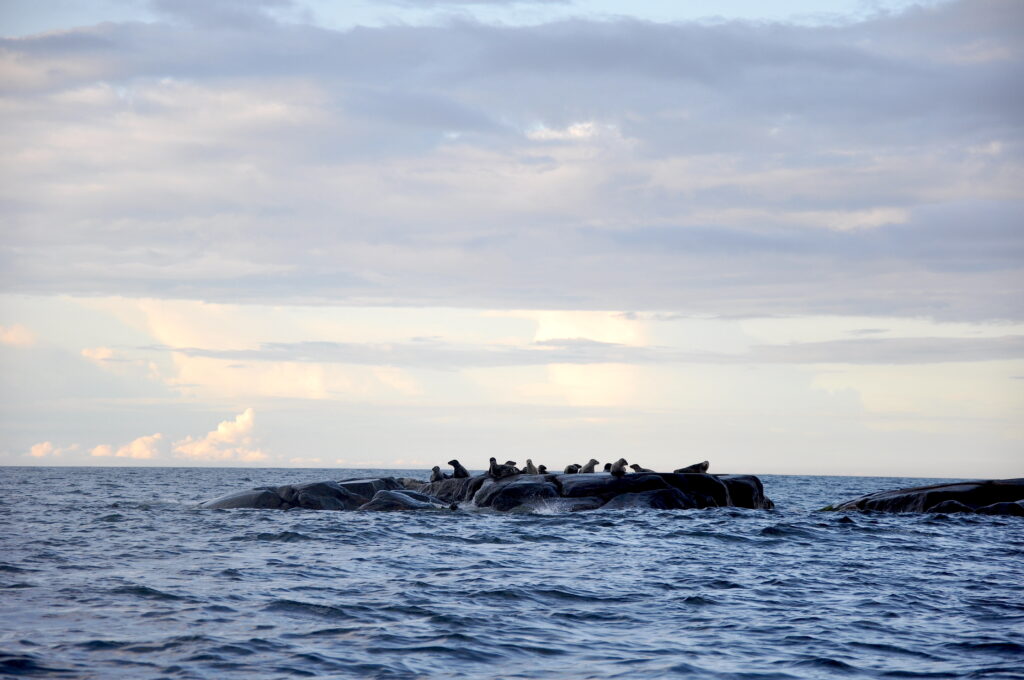
Seal hunting has played a significant role in Harstena’s history. The old tax records from the 1500s show that seals were of great importance even back then. It is likely that it was the seals that first attracted people to settle on the island.
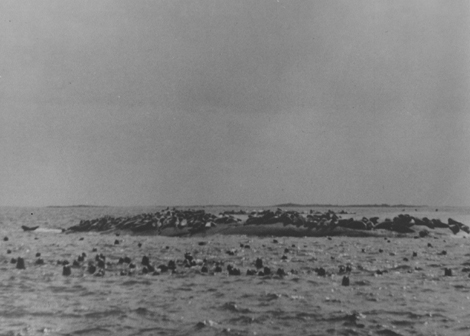
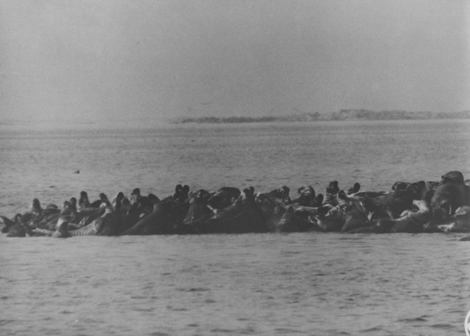
Harstena’s seal skerries were probably the largest gathering place for grey seals along the entire east coast. By the late 1920s, as many as 40 000 seals were counted on the seal skerries off Harstena.
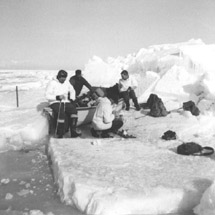
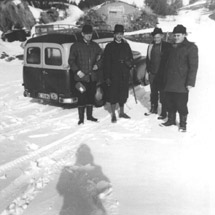
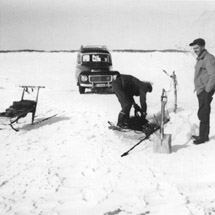
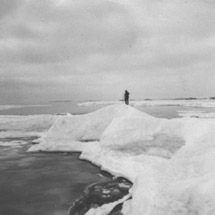
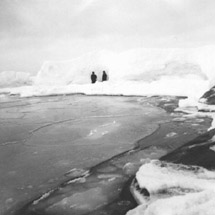
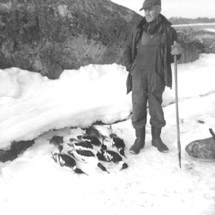
Seals were traditionally caught using nets placed around the skerries. The practice of clubbing seals, for which Harstena is most famous, didn’t begin until the 20th century.
Seal hunting was an important source of income until the early 1940s when it ceased, mainly due to low prices for blubber and pelts. During the 1960s and 1970s, the seal population in the Baltic Sea was nearly wiped out due to environmental toxins, and it wasn’t until the late 1990s that clear signs of the seals’ return began to appear. Today, a seal protection area has been established off Harstena, where a small seal colony of about 50–60 animals is slowly growing.
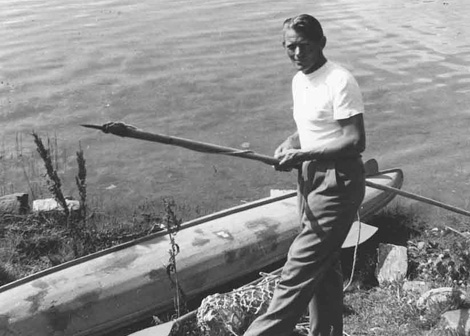
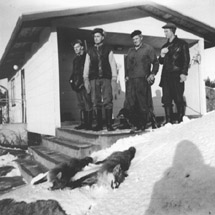
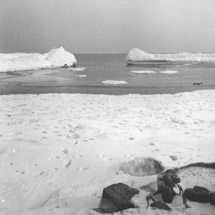
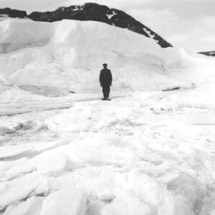
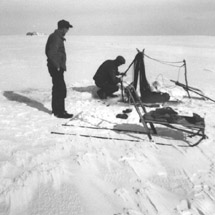
The first two images below were taken by Prince Wilhelm in July 1947. In the top image on the page, the Prince is with Elof Magnusson in the boat, and in the seal skerry, the rest of Harstena’s seal hunting team—Hugo, Evert, Paul, and all the others—can be seen. The last image of Hugo Magnusson was taken in 1954.